Autism Awareness: Why Empathy Alone Isn’t Enough
Autism Awareness: Why Empathy Alone Isn’t Enough
In learning and development, one idea shows up again and again: “Empathy is the most powerful driver of understanding.” It sounds right. It feels right. And in many ways, it is right.
But it’s also incomplete.
Empathy can open the door to understanding—but it doesn’t always build it. And if your goal is real behavioral change, especially in areas like workplace inclusion or autism awareness, you need more than just a moment of emotional connection.
You need a learning experience that connects emotion with accurate understanding.
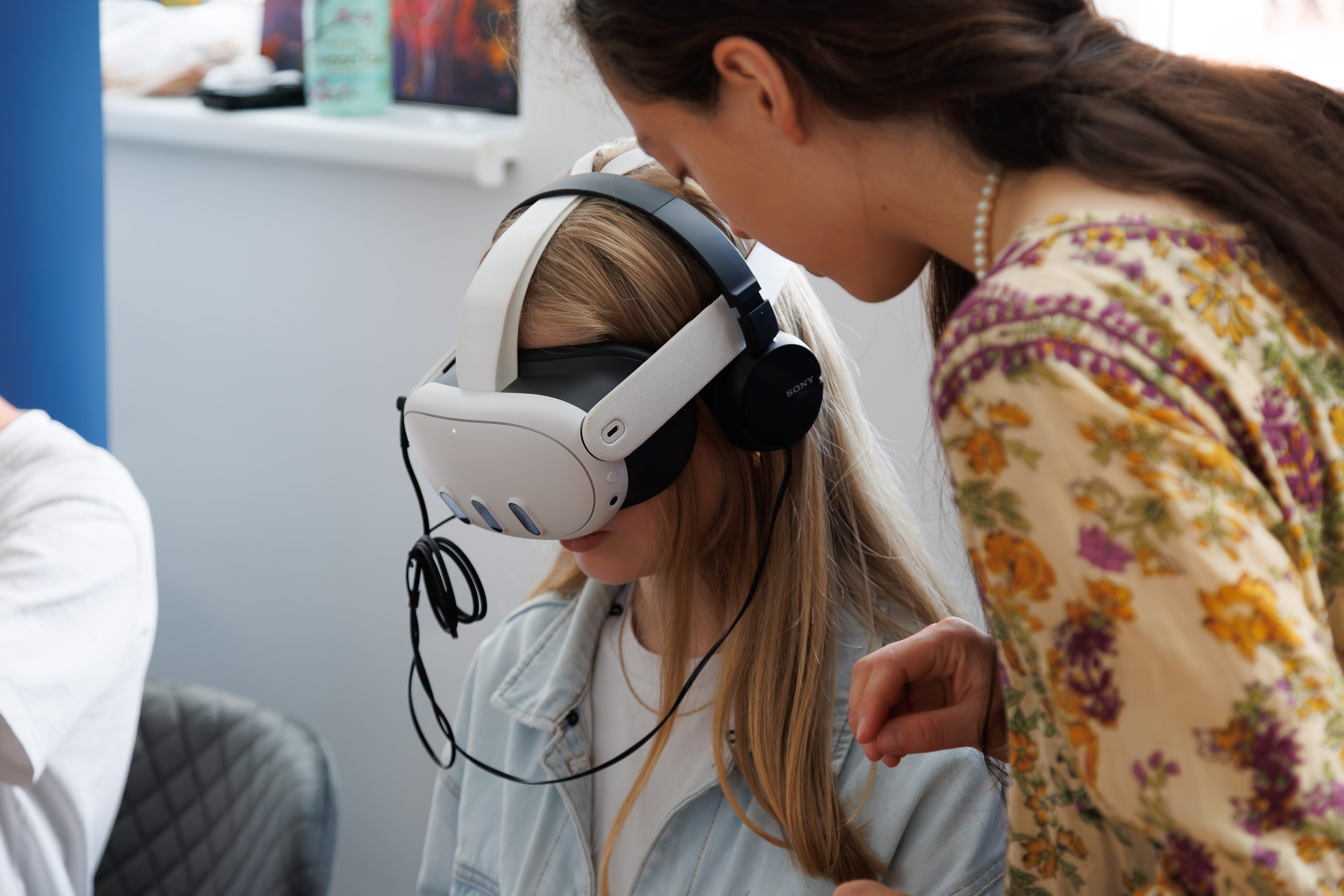
This is where virtual reality (VR) training becomes uniquely powerful.
Autism Spectrum Awareness: The Missing Link Between Feeling and Knowing
Let’s break this down.
In psychology, we distinguish between:
Understanding → knowing why something happens
Empathy → feeling what it might be like
Most traditional training focuses heavily on the first:
presentations
statistics
explanations
And while this builds cognitive understanding, it often fails to change behavior.
Why?
Because people don’t act on what they know—they act on what they feel.
On the other hand, empathy alone can also fall short. Without the right context, people may:
misinterpret what they experience
project their own feelings incorrectly
or fail to connect the experience to real-world behavior
So what actually works?
A combination:
Emotional activation (empathy)
Accurate framing (understanding)
Reflection and integration
And this is exactly what VR enables.
Why VR Training Works: From Experience to Insight
Virtual reality changes the learning sequence.
Instead of starting with theory, it starts with experience.
Imagine trying to explain sensory overload on the autism spectrum using slides. You can describe it. You can show videos. You can share research.
But none of that truly answers the question:
“What does it actually feel like?”
VR can.
By placing someone inside a simulated environment, VR triggers:
emotional engagement
sensory immersion
focused attention
This activates empathy—not as an abstract concept, but as a lived moment.
And here’s the key insight from learning science:
Emotion makes learning stick.
When people feel something:
they remember it longer
they reflect more deeply
they become more open to new perspectives
That’s why VR is so effective in autism spectrum awareness training—it creates a memorable emotional anchor.
From Empathy to Understanding (and Back Again)
But VR doesn’t stop at empathy.
The most effective VR learning experiences are designed as a sequence:
Experience (VR simulation)
→ triggers emotional empathyExplanation (guided reflection or facilitation)
→ builds accurate understandingIntegration (discussion or application)
→ translates insight into behavior
This creates a powerful loop:
empathy increases motivation to understand
understanding refines and stabilizes empathy
Without this loop, learning breaks down:
empathy without understanding becomes shallow
understanding without empathy becomes forgettable
VR connects both.
Autism Awareness Training That Actually Changes Behavior
In workplace settings, the goal isn’t just awareness—it’s better interaction, communication, and inclusion.
And that requires more than knowledge.
Employees need to:
recognize sensory challenges
interpret behavior correctly
adjust their communication in real time
This is where VR stands out.
Because instead of telling people what to do, it allows them to:
experience confusion, overload, or distraction firsthand
notice their own reactions
build intuitive understanding
This leads to something traditional training rarely achieves:
behavioral change driven by insight, not instruction.
A Better Way to Learn
So, is empathy the most powerful driver of understanding?
Not exactly.
A more accurate statement would be:
Empathy accelerates understanding—but understanding makes empathy useful.
VR training works because it brings both together:
it creates an emotional moment that captures attention
and then builds the structure needed to make sense of it
In the context of autism awareness and autism spectrum awareness, this combination is critical.
Because when people don’t just learn—but truly experience—they don’t just understand more.
They act differently.
And that’s where real impact begins.